


DEVELOPMENT
Representative wooden toys include building blocks, puzzles, mini pianos, etc. With distinct functions, they unlock children’s potential in various aspects.
Wooden toys come in natural, abstract, and artistic forms. Natural forms reflect essence and comfort; abstract ones embody intellect and imagination; artistic ones showcase aesthetic value and beauty. When down, a large clumsy toy deepens distress—instead, a bright, elegant, cheerful toy lifts mood drastically.
Wooden toys not only charm with unique intellectual benefits but also excel in practicality and safety. Crafted from wood, they are non-toxic, odorless, and good for children’s well-being. Their shatterproof, wear-resistant, impact-resistant traits make them popular among foreign buyers.
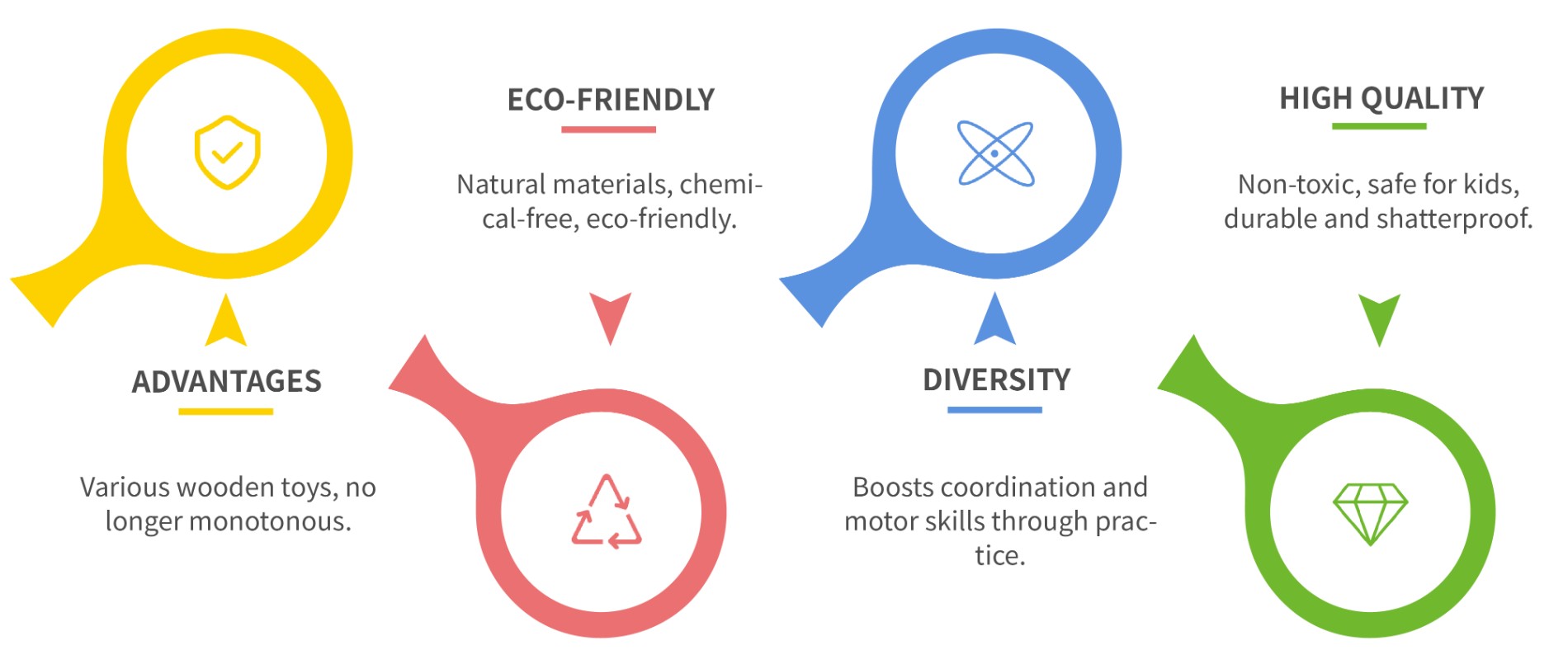
Functional Advantages of Wooden Toys
Wooden toys enhance kids’hand-eye/hand-foot coordination and physical skills—key abilities built through training, ideal tools.
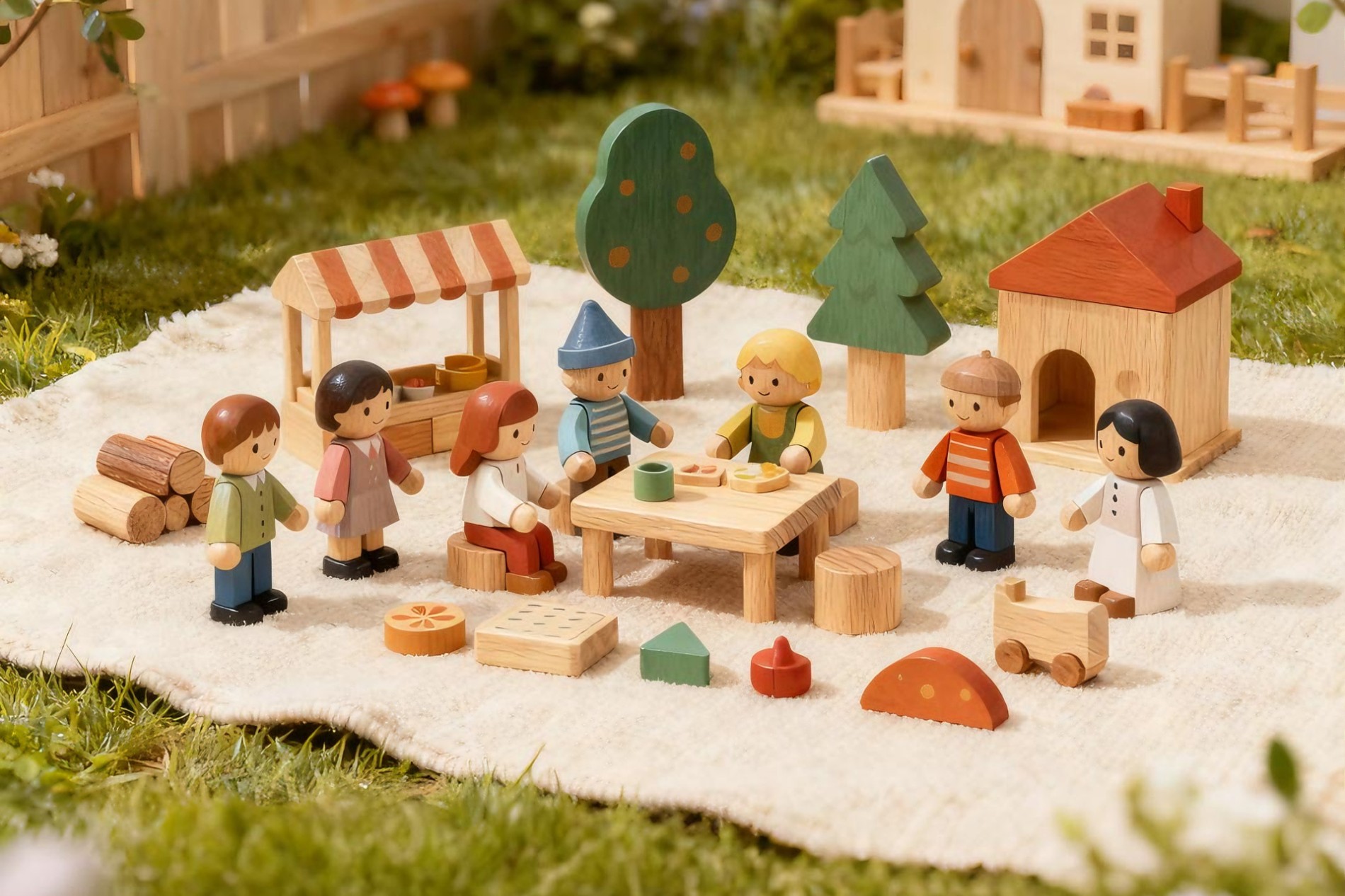
Role-Playing Toys: A Favorite Among Toddlers
Role-playing is a toddler favorite. Children take on roles like doctors or teachers, experiencing social identities through language and actions. It provides natural interaction scenarios—communicating and collaborating with peers helps them build social skills for future development.
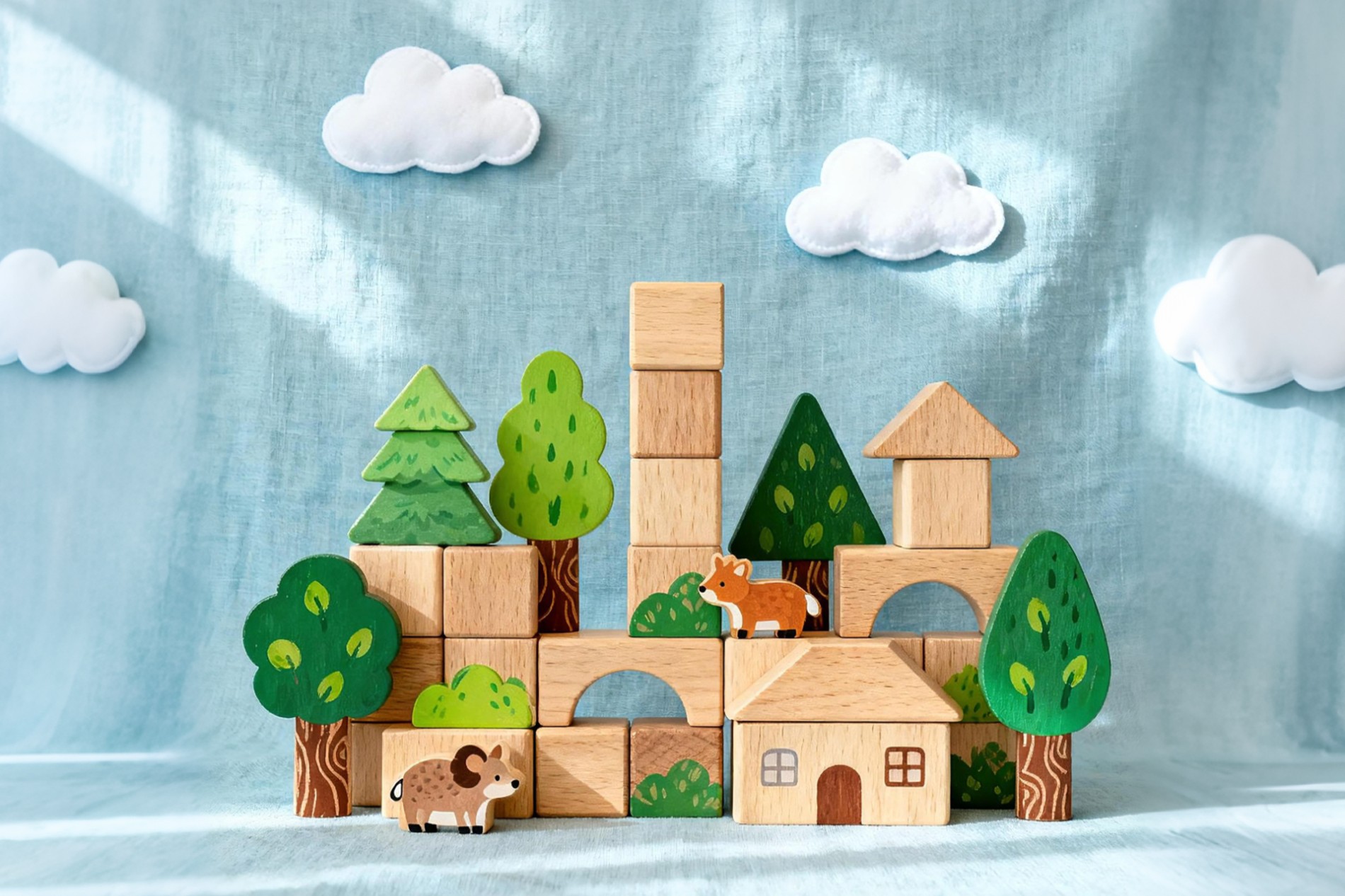
Building Blocks: Spark Babies’ Hands-On Interest
Building blocks—common wooden toys—boost toddlers’ spatial awareness, color/shape recognition, coordination, and creativity. Choose age-appropriate sets: start with fewer pieces (picture-guided), then more for free play.
Integrity, Cooperation, Win-Win
Rooted in integrity, driven by innovation. Quality-centric, credibility-first. We warmly welcome global partners for cooperation and shared success.
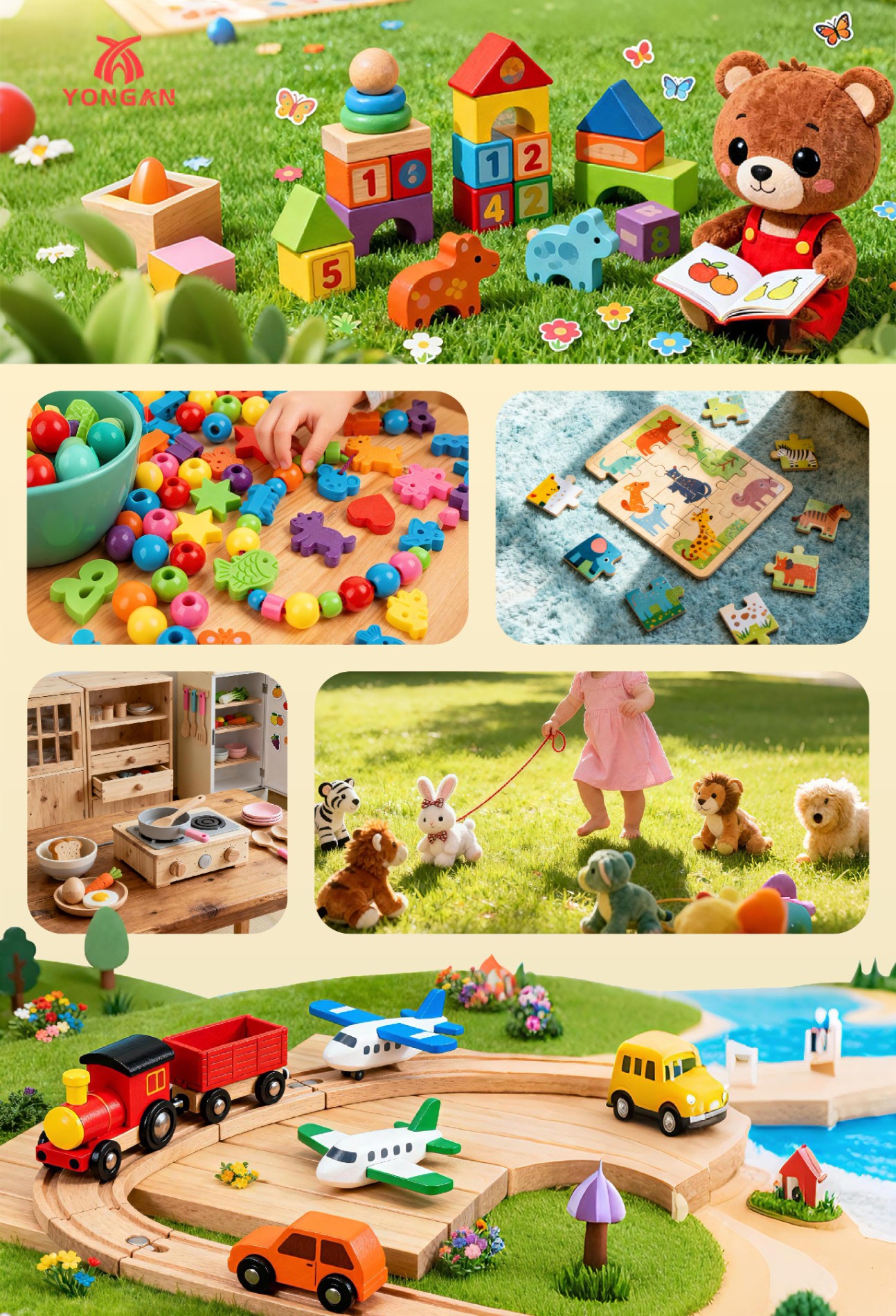
Preschool Education:
Develops babies is inlay ability, gross/fine motor skills, shape/number/quantity recognition, and muscle flexibility.
Beading Toys:
Beading exercises boost kids is hand-eye coordination, bimanual collaboration, dexterity, and wrist flexibility. They also support counting, basic math, shape matching, and sorting.
Puzzle Toys:
Composed of diverse, rich puzzle pieces, it builds independent thinking, patience, and perseverance in toddlers—based on their understanding of shape assembly, disassembly, and recombination.
Pull-Along Toys:
Boosts babies is cognition (learning animal traits via different pull-along toys) and large-range walking skills.
Transportation Toys:
Trains toddlers is assembly, pulling, and organizing skills (via vehicle structures) – boosting hands-on awareness, self-care, and understanding of object transformation.
Tool Toys:
Helps babies recognize tool shapes, colors, and structures—training hands-on/hand-eye coordination, sparking imagination, and enhancing cognition, analysis, and a sense of achievement.